

Migraines
Migraines can severely affect the quality of the sufferer’s life and can prevent them from carrying out normal daily activities. However, a number of treatments are available which can reduce the symptoms and prevent further attacks.
What are migraines?
A migraine is a chronic neurological disorder characterised by recurrent, moderate-to-severe, often one-sided throbbing head pain, typically lasting 4 to 72 hours. Beyond just a headache, it is frequently accompanied by nausea, vomiting, and heightened sensitivity to light, sound, or smell. These debilitating attacks often interfere with daily life and may be preceded by sensory warnings known as "auras".
The frequency of migraines varies from patient to patient. Some patients may have migraines several times a week, others may only have a migraine once every few years. Likewise, the severity of the migraine is also variable. While some migraines may be managed using over-the-counter painkillers, others may cause patients to have paralysis, slurred speech, a blinding pain, fever, seizure, double vision or a rash. In these more severe instances, patients should see a doctor as soon as possible.
Neuromodulators are an effective method for alleviating the symptoms of migraines with fewer side effects and hassle compared to other treatment methods.
Common symptoms include:
Severe headache
Visual disturbances e.g. spots or flashing lights
Sensitivity to light, noise, or smells
Nausea and vomiting
Tingling sensations, pins and needles, and weakness or numbness in the limbs
The procedure:
We advise patients to consult their GP/specialist in the first instance for treatments and investigations into severe/worrying/persistent headaches.
Where patients have had a full check-up and diagnosis and tried other treatments, then neuromodulators may provide an alternative option with potentially longer-lasting benefits.
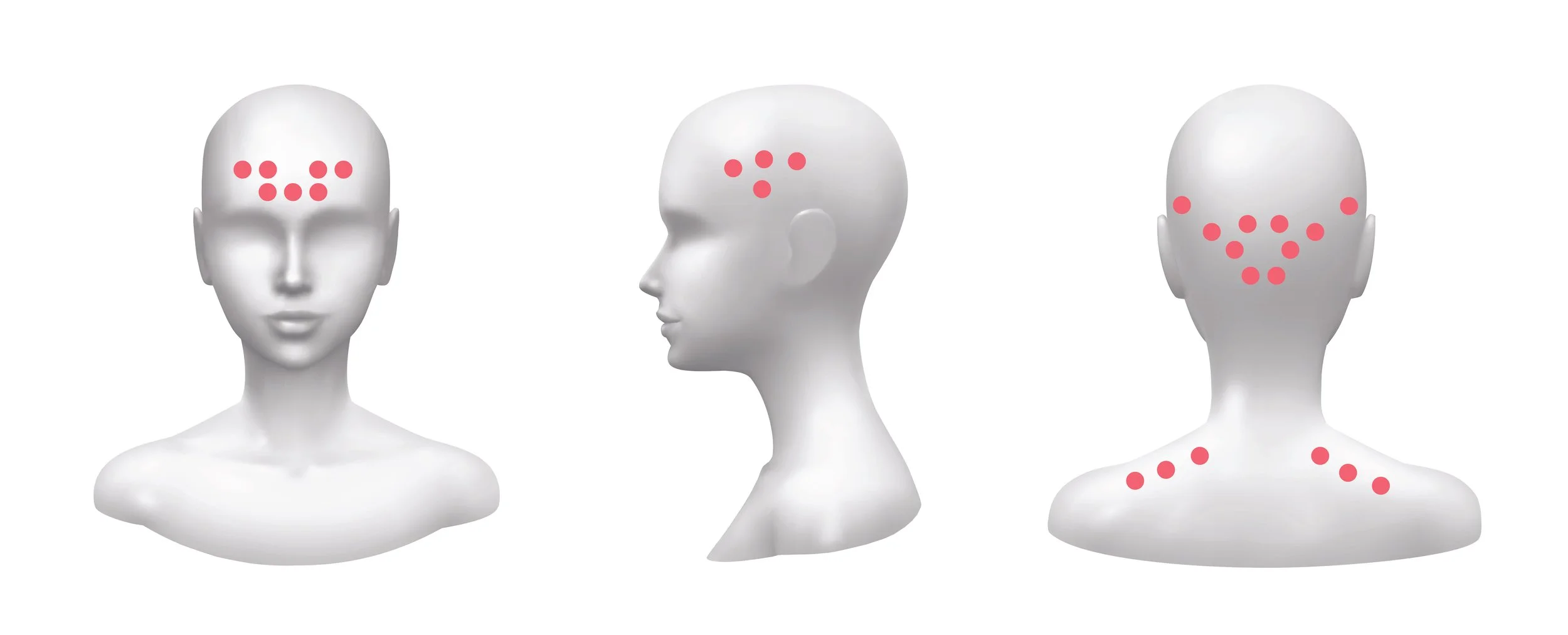
How neuromodulators for migraines work
The true cause of migraines is unknown and can vary from person to person. However it is now clear that some patients who have suffered with migraines and certain types of headaches in the past no longer have the symptoms or else find that they are much reduced in frequency and/or severity after treatment.
In the mid-1990s, a number of patients reported an improvement in their headaches having received the same treatment for other reasons. Further clinical trials since this time found that this procedure was particularly effective in treating chronic migraines. Unlike in the other conditions that this procedure is used to treat, when used for migraines it is not thought to work by relaxing overactive muscles. Instead, it has been shown to inhibit the release of peripheral nociceptive neurotransmitters, which is then believed to have a knock-on effect on the central pain processing system that generates migraine headaches.
This a quick treatment, taking only ten to fifteen minutes to administer. It is a low risk procedure using small superficial injections. The procedure does need to be repeated to maintain the effect, and results are normally seen after the second treatment. Treatments cycles are undertaken every twelve weeks.
Pain: Mild - moderate
Social Downtime: 24-72 hours, potential for bruising
Results: Are seen within 3 weeks
Recommended course: 2-3 treatments 3 months apart
Treats: Tension, jaw pain, neck and back pain
Cost: From £620